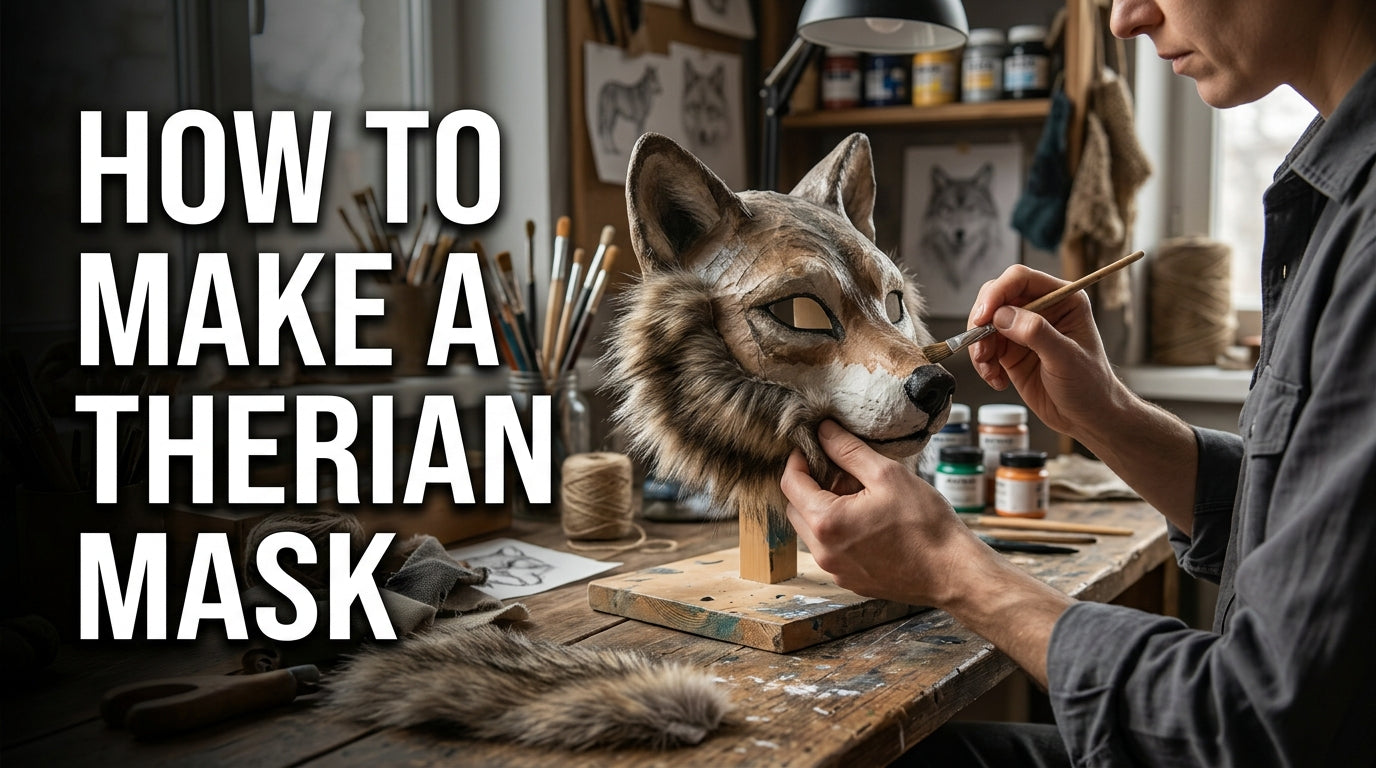
How to Make a Therian Mask
Making a therian mask is one of the most rewarding DIY projects in the therian community. Whether you’re crafting for self-expression, quadrobics, or community events, a well-made mask brings your theriotype to life. This guide walks you through materials, techniques, and finishing touches – no experience required.
🐺 What Is a Therian Mask and Why Make One?
A therian mask is a wearable animal-inspired face covering that represents a person’s theriotype – the animal they identify with on a spiritual or psychological level. These masks range from simple foam constructions to detailed fursuits with moving jaws and realistic fur textures.
Making your own mask gives you full creative control over color, shape, and species accuracy. Store-bought options rarely capture the exact look of your theriotype. A handmade piece also carries personal meaning that a mass-produced item simply cannot replicate.
Therian masks are commonly used during quadrobics (movement practice on all fours), outdoor nature walks, and therian community meetups. Some people also wear them for meditation or grounding rituals tied to their therian identity.
🛠️ Materials You’ll Need Before You Start
Choosing the right materials makes the difference between a mask that lasts one outing and one that holds up for years. The good news is that most supplies are affordable and widely available at craft stores or online.
Core Materials for a Basic Therian Mask
- EVA foam (2mm-6mm thickness) – the foundation for most beginner masks
- Faux fur fabric in your theriotype’s coloring (short pile for realism, long pile for fluffy looks)
- Contact cement or hot glue gun for bonding foam and fur
- Elastic band or adjustable straps for secure fit
- Acrylic paint and a heat gun for shaping and detailing foam
- Safety eyes, glass eyes, or hand-painted eyes for a finished look
For more advanced builds, you may also want upholstery foam for sculpting snouts, mesh fabric for breathable eye areas, and resin for hard-shell components. Budget roughly $20-$60 for a solid beginner mask, depending on fur quality and eye type.
Tools That Make the Process Easier
A sharp craft knife or scissors, a rotary tool for detail carving, and a sewing machine (or needle and thread) are your core tools. A heat gun is almost essential for shaping EVA foam into curved snout and brow shapes. If you don’t own one, a hair dryer on high heat works in a pinch.
📐 How to Make a Therian Mask Step by Step
This process covers a foam-and-fur therian mask, which is the most popular method for beginners and intermediate makers. The steps apply to wolf, fox, deer, cat, and most other common theriotypes.
Step 1 – Create a Head Pattern
Wrap your head in plastic wrap, then apply two to three layers of masking tape over it. Once dry, carefully cut it off and flatten it into a pattern. This gives you a custom-fitted base that matches your exact head shape. Alternatively, download a free foam mask base pattern from maker communities like DeviantArt, where many experienced crafters share free templates.
Step 2 – Cut and Shape the Foam
Transfer your pattern pieces onto EVA foam sheets and cut them out. Use a heat gun to warm the foam until it becomes pliable, then press it into curved shapes around a round object like a bowl or ball. Hold it in place until it cools and retains the curve. This technique is how makers achieve realistic rounded muzzles and foreheads.
Build up the snout by layering foam pieces. Start with a base shape, then add smaller pieces on top to create depth. Carve details like nostrils with a craft knife or rotary tool. Sand rough edges with coarse sandpaper for clean seams.
Step 3 – Assemble the Base Structure
Glue your shaped foam pieces together using contact cement for a permanent bond, or hot glue for faster assembly. Contact cement creates stronger joins and is recommended for pieces under stress, like the snout attachment. Let all joins cure fully before moving to the fur stage.
At this stage, cut out the eye openings. For a wearable therian mask, the wearer typically sees through mesh-covered openings positioned in the cheek or lower brow area, not through the decorative eyes. This keeps the animal proportions realistic while maintaining visibility.
Step 4 – Fur the Mask
This is where your mask transforms. Cut faux fur pieces slightly larger than each foam section, following the fur grain direction carefully. The fur should always flow downward and backward, mimicking how real animal fur grows.
Glue fur sections down with hot glue, working in small sections. Trim excess fur at seams with small scissors, then use a wire slicker brush to blend seams by brushing fur fibers over the join. Blending seams properly is the single biggest skill that separates beginner masks from professional-looking ones.
Step 5 – Add Eyes, Nose, and Details
Install safety eyes or hand-painted resin eyes into pre-cut holes. A realistic animal nose can be sculpted from air-dry clay, cast in resin, or purchased pre-made from therian and fursuit supply shops. Paint it with acrylic paint and seal with a matte varnish for durability.
Add airbrushed or hand-painted shading around the eyes, muzzle, and ears to create depth. Even simple shading with a darker tone around the eye sockets dramatically increases realism. Whiskers can be added using trimmer line or stiff nylon thread glued into small holes.
Step 6 – Attach Straps and Test the Fit
Sew or glue elastic bands or adjustable straps to the interior of the mask. Position them so the mask sits comfortably without pressing on your nose or slipping during movement. If you plan to use the mask for quadrobics or active movement, test the fit at different head angles and make sure visibility through the eye mesh is adequate before finishing.
🐾 Therian Mask Styles Compared
Not all therian masks use the same construction method. Here’s a quick comparison to help you choose the right approach for your skill level and goals.
| Style | 🟢 Best For | 💰 Cost Range | ⚠️ Difficulty |
|---|---|---|---|
| Foam + Fur (Half Mask) | Beginners, quadrobics | $20-$50 | ⭐⭐ |
| Foam + Fur (Full Head) | Immersive wear, events | $60-$150 | ⭐⭐⭐ |
| Resin Hard Mask | Display, photoshoots | $40-$100 | ⭐⭐⭐⭐ |
| Premade + Customized | Quick builds, low budget | $10-$30 | ⭐ |
💡 Pro Tips for a Better Finished Mask
These are the details that experienced mask makers use to elevate their work. Small adjustments at each stage add up to a significantly more polished result.
- Always cut fur from the backing side with a craft knife to avoid cutting the fibers
- Use a lint roller after brushing seams to remove loose fibers before they set into the glue
- Seal painted foam with Plasti Dip or Flexbond before furring to prevent paint cracking
- Add thin foam padding inside the mask where it contacts your forehead for comfort during long wear
- Test eye mesh visibility in different lighting conditions, especially low light, before finalizing
- Store the finished mask on a rounded stand or stuffed with tissue paper to maintain its shape
If you’re deciding between making your own mask and buying one, it’s worth reading about where to get therian masks to compare the cost and quality of handmade versus purchased options – sometimes a hybrid approach works best.
🎨 Customizing Your Mask for Your Theriotype
The real magic of a DIY therian mask is how precisely you can tailor it to your specific theriotype. A timber wolf mask looks very different from an arctic fox or a whitetail deer, and the details matter to the person wearing it.
Research reference photos of your theriotype’s actual species. Notice ear placement, muzzle length, eye shape, and natural markings. Accurate species reference is what separates a generic animal mask from one that genuinely represents your theriotype.
For markings like facial stripes, patches, or gradients, airbrushing gives the smoothest results. If you don’t have an airbrush, dry-brushing with acrylic paint and a stiff brush creates a similar blended effect. Seal all painted areas with a flexible matte sealer to prevent cracking during wear.
Ear shape and positioning are often the most expressive element. Pointed ears for canines and felines, rounded ears for bears and deer, and large cupped ears for fennec foxes or rabbits – getting this right immediately communicates your theriotype to others in the community. Ears can be wired internally with floral wire to hold a specific pose, or left soft for natural movement.
If your creative process extends beyond mask-making, learning how to draw a therian is a natural next step – sketching your theriotype first can actually help you plan your mask design more accurately before cutting any foam.
✅ Final Thoughts on Making Your Own Therian Mask
Building a therian mask from scratch takes patience, but the result is a piece that genuinely reflects who you are. Start simple with a foam half-mask, focus on clean seams and good fur direction, and add complexity as your skills grow. The therian maker community is generous with tutorials and feedback, so don’t hesitate to share your progress and ask questions. Your theriotype deserves a mask made with intention, and now you have the foundation to create exactly that.